Stochastic modelling and decision analysis

5 studies of infectious disease.

Each study asks one question about an outbreak, answers it with a model I wrote and checked in R, and says plainly how far the answer can be trusted. Every page lets you explore the saved results.

Explore the studies
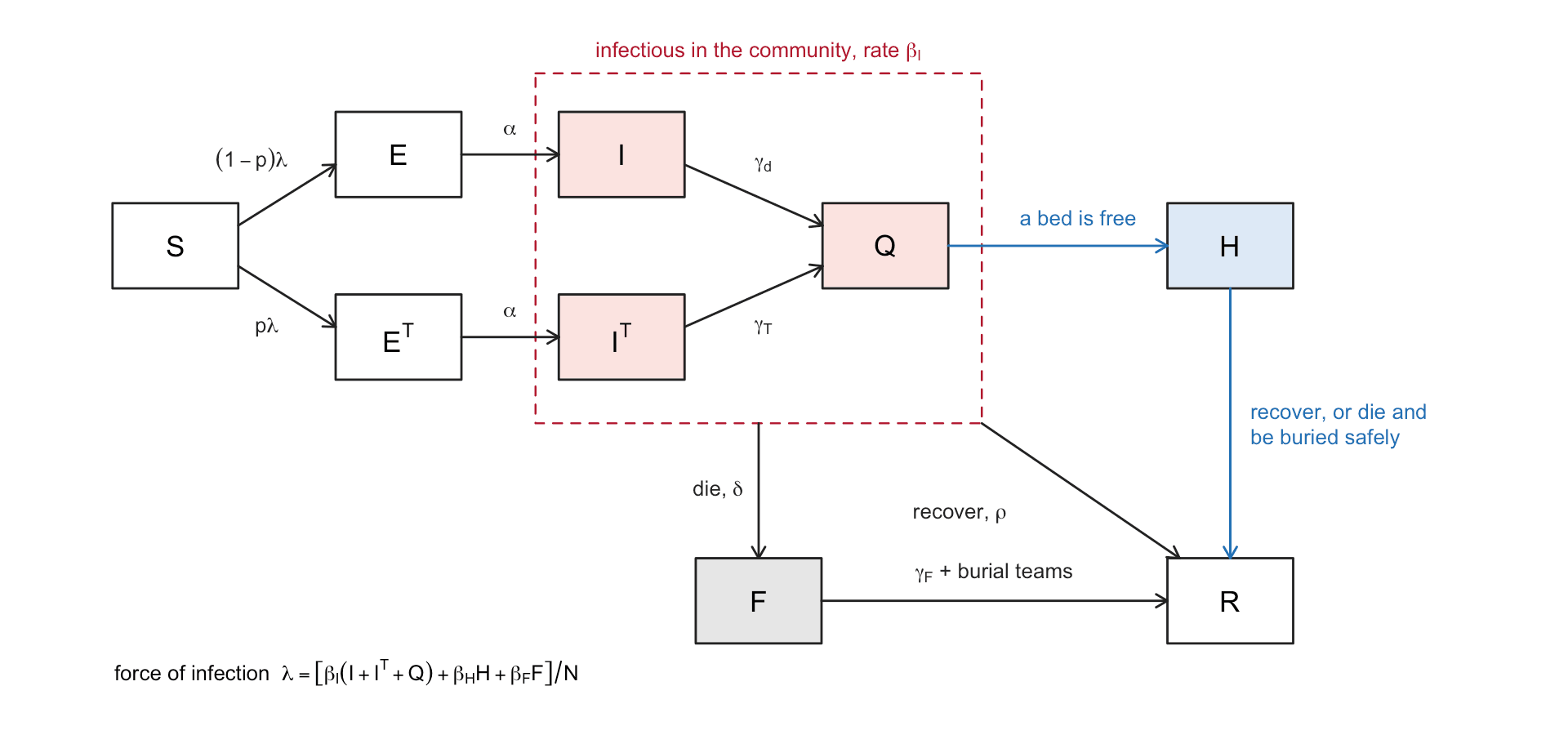
Diagram of the Ebola model’s states, from susceptible through a queue for a treatment bed to burial.

Epidemiological modelling · Timing · Capacity · Cost

Ebola Response Capacity

A stochastic model in R of one Sierra Leone district during the 2014 Ebola epidemic, with treatment beds, burial teams and contact tracing that can each start late and run out. It asks whether responding earlier or bigger matters more, what a fixed budget should buy, and whether the response is worth its cost. The page lets you explore the saved results.

  • R
  • Stochastic simulation
  • Queueing
  • Cost-effectiveness
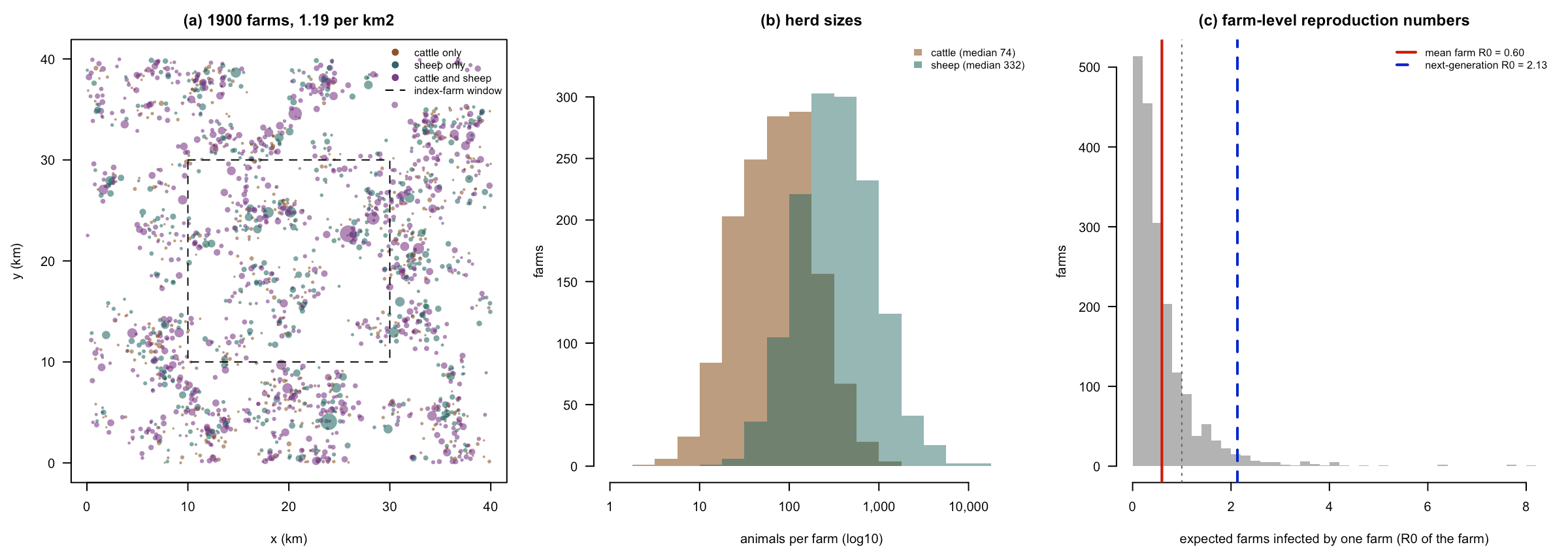
The study’s synthetic landscape of farms, with the distributions of herd sizes and of each farm’s reproduction number.

Epidemiological modelling · Queues decide outcomes

Foot-and-Mouth Culling and Vaccination

A farm-by-farm model in R of a foot-and-mouth outbreak on a synthetic landscape of 1,900 farms. It compares culling infected farms, ring culling and ring vaccination when only so many farms can be culled, or cattle vaccinated, each day. The page lets you explore the saved results.

  • R
  • Spatial epidemic model
  • Stochastic simulation
  • Capacity limits
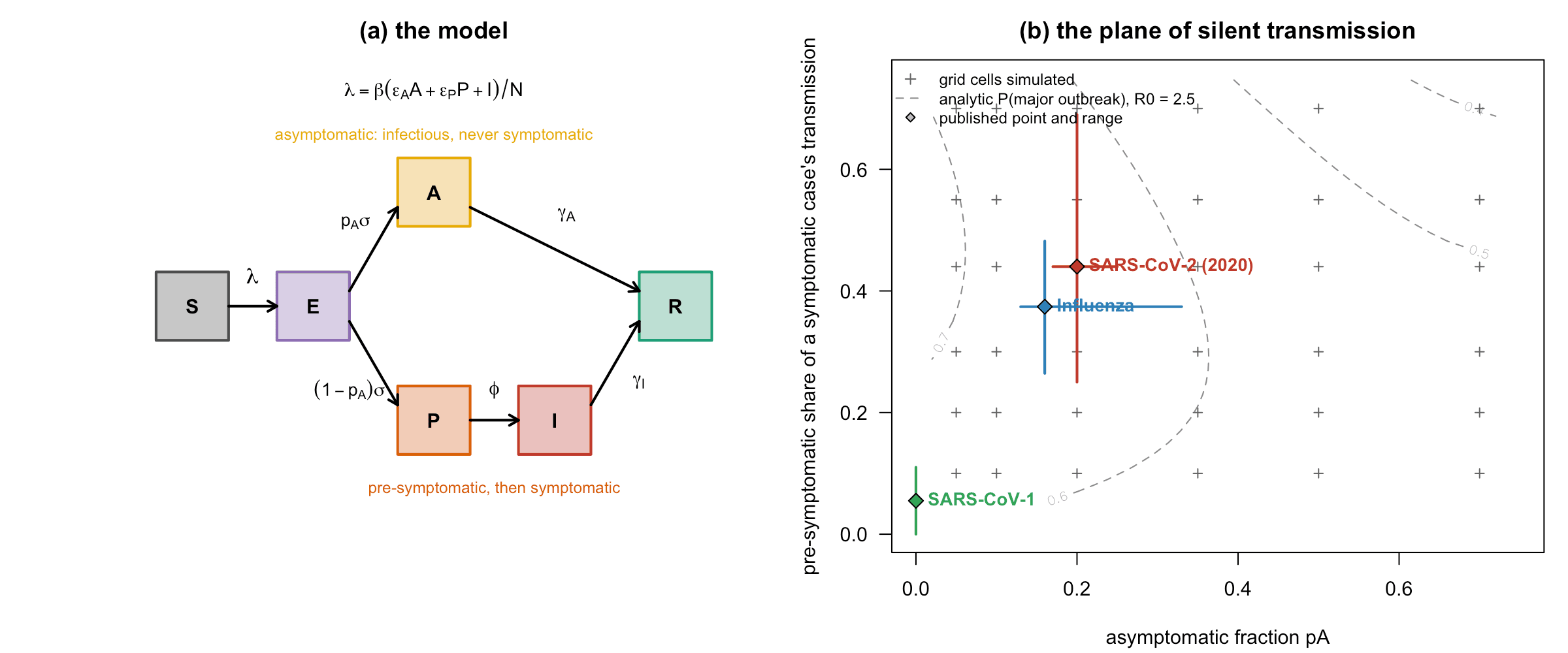
A diagram of the model’s states beside the grid of silent fractions that were simulated, with published values marked.

Epidemiological modelling · Fade-out · Detection · Isolation

SARS-CoV-2 Silent Spread

A stochastic model in R of one infected person arriving in a town, asking what asymptomatic and pre-symptomatic transmission change: how often the arrival fades out, how long it stays hidden, and whether isolating people with symptoms can stop it. The page lets you explore the saved results.

  • R
  • Stochastic simulation
  • Branching processes
  • Tau-leaping
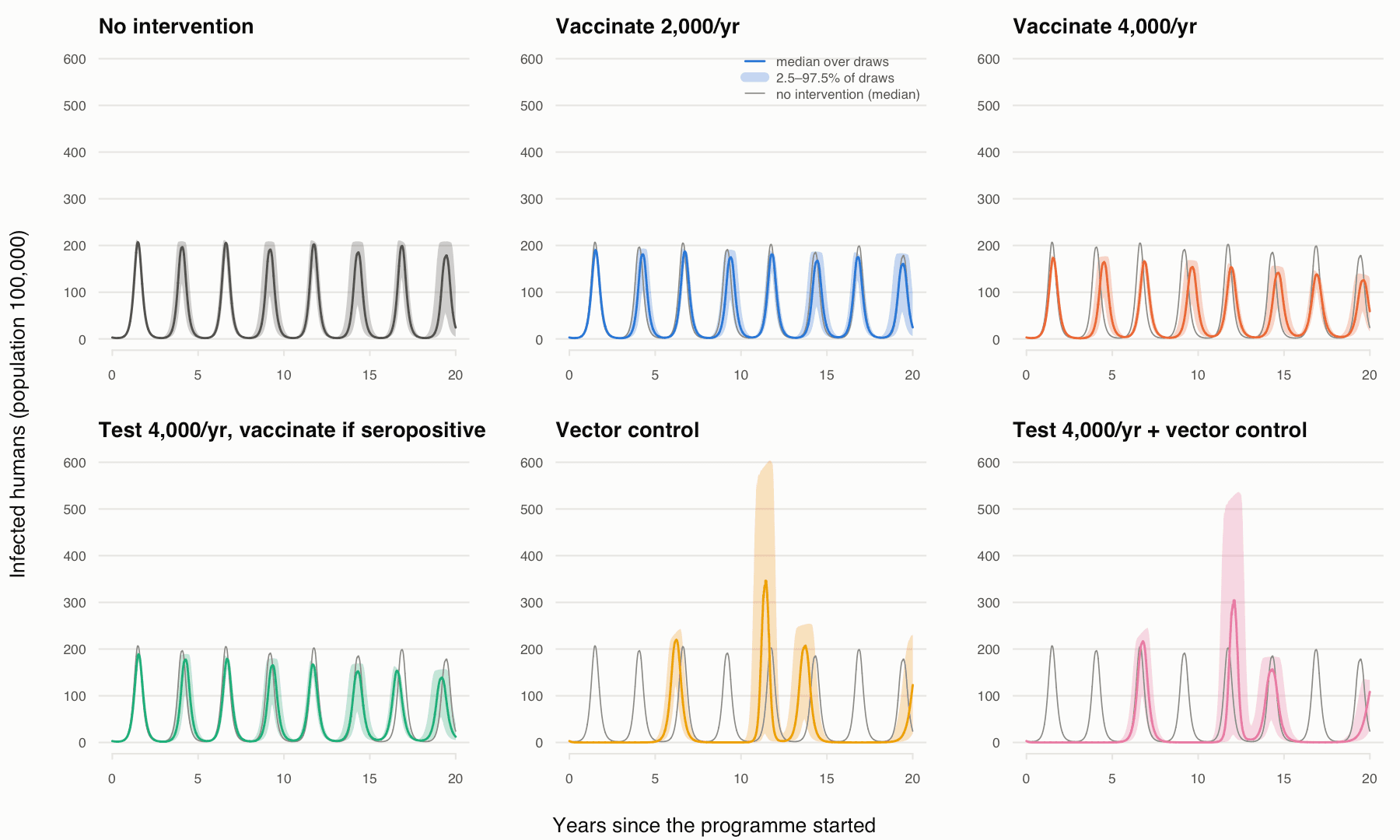
Six panels, one per strategy, showing the number of infected people in the model over time.

Health-economic modelling · Vaccine · Vector control · Cost

Dengue Cost-Effectiveness

A cost-effectiveness study in R of dengue vaccination and vector control in a hypothetical country, built from my Warwick coursework. I re-implemented and verified the coursework model, then asked which of six strategies is worth its cost and which assumptions could change the answer. The page lets you explore the saved results.

  • R
  • Cost-effectiveness
  • Compartmental model
  • Sensitivity analysis
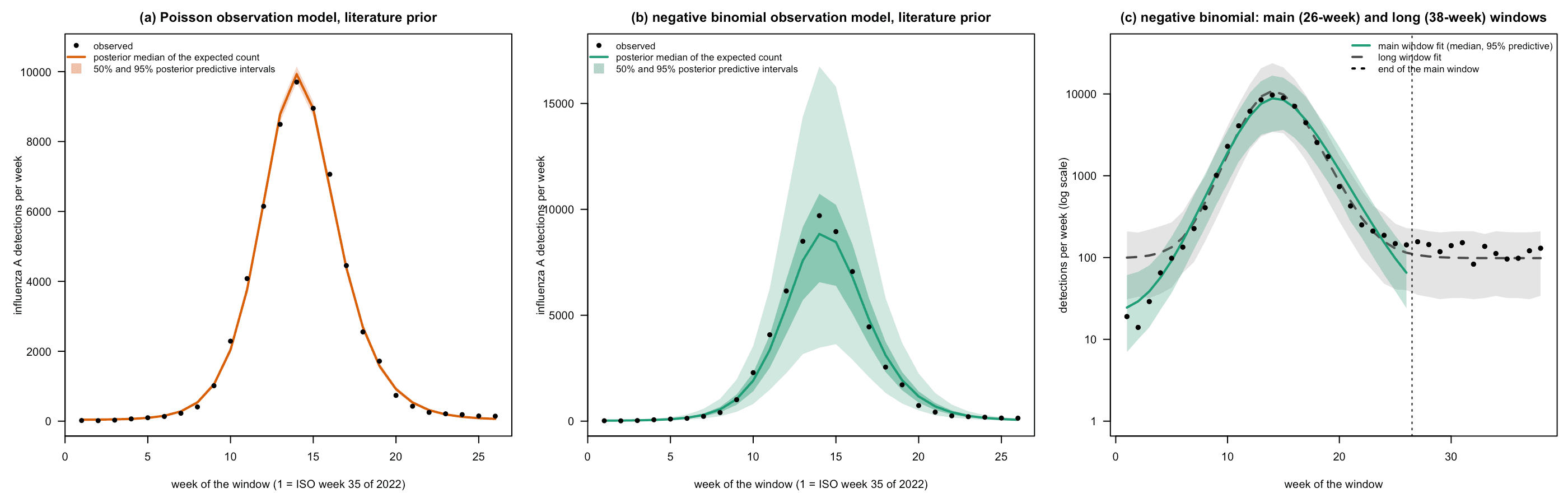
Three panels of weekly influenza A detections with the fitted model: the Poisson fit, the negative-binomial fit, and a longer window.

Bayesian inference · What the data identify

Influenza SIR Inference

I fitted a simple epidemic model in R to one season of public influenza surveillance counts for Canada, from WHO FluNet. I asked which of the model’s numbers the counts really determine, how early the season could have been forecast, and whether the reported uncertainty can be trusted. The page lets you explore the saved results.

  • R
  • Bayesian inference
  • MCMC
  • Forecasting